
Candeia · sistema digital em construçãoStatus do projeto
GOV.CANDEIAPortal do Sistema Candeia
Entrar em Candeia

Serviços

ServiçosIdentidadeCidadaniaDocumentosRegistro de novo cidadãoVerificar documentoCorrespondência oficialSímbolos de Candeia

Instituições

Instituições de CandeiaSobre CandeiaStatusFundaçãoConstituiçãoDireitos digitaisLegislaçãoDiário OficialGovernoJustiçaEleiçõesResultados eleitorais

Economia

EconomiaComo a economia se conectaTrabalhoContratosConsumidorEmpresasPropriedadeEscudo CE$BNDCMercado Público

Transparência

Visão geralOrçamentoCompras públicasAcesso à informaçãoIntegridadeAlgoritmosDadosEstatísticas

Infraestrutura digital

InfraestruturaCibersegurançaAPIsSistema CandeiaStatus operacionalTerritório digitalIntegrações externasAjudaAcessibilidadeIdiomasSobre o portalContatoApoiar Candeia

Candeia OS

Interface operacional · pré-alfa

Conhecer o Candeia OSEntrar para acessarVer status do projeto
Ordinary jurisdiction · harmonisation of the law

Supreme Court

The proposed Supreme Court is the final instance of Candeia’s ordinary jurisdiction. It may conclude appeals concerning internal disputes and harmonise the interpretation of Candeian law, but final constitutional questions belong to the Constitutional Court.

Future constitutional architecture · not establishedConstitutional proposal · not promulgatedReview · 1 Sep 2026
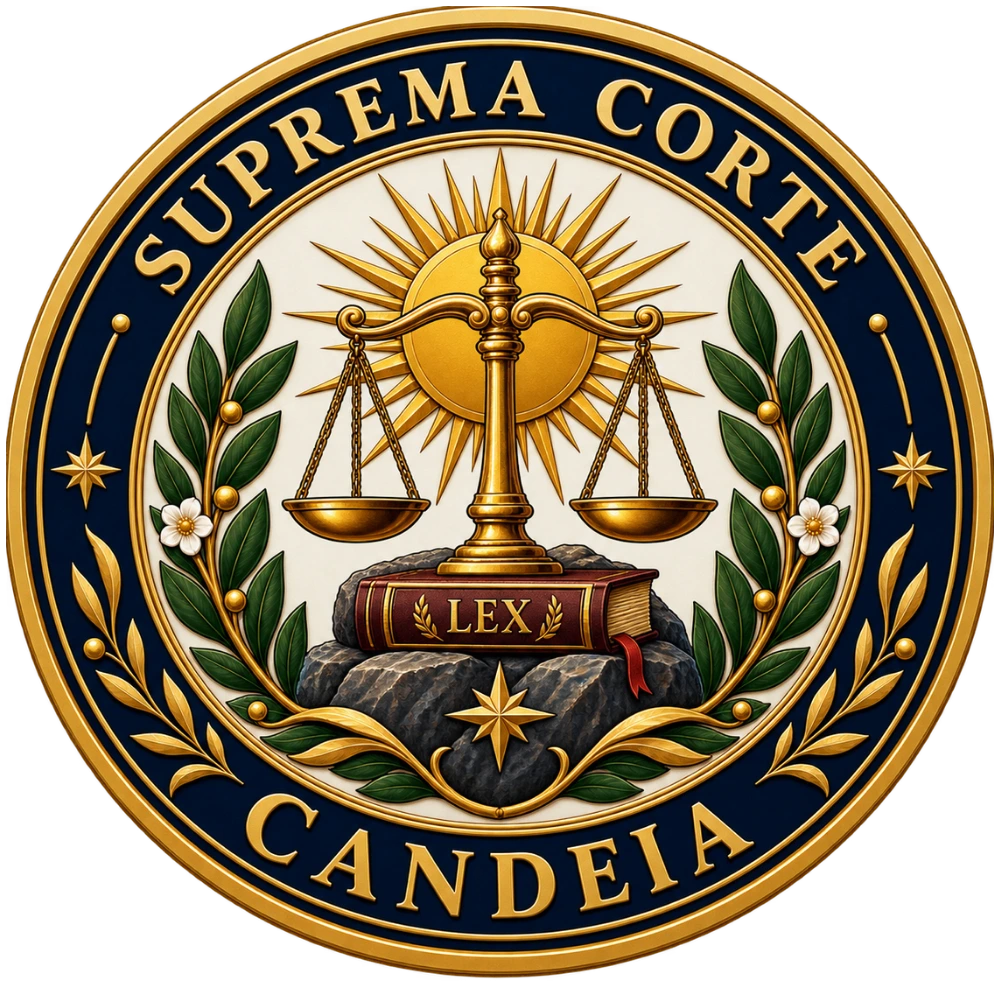
Approved institutional seal associated with Candeia’s Justice system
Seats9 permanent constitutional seats
TermSingle, staggered, 12-year term
Appointments3 Assembly · 3 National Council of Justice · 3 Presidency, always following public qualification
Current status

Candeia’s Justice system is provided for in the Constitutional Proposal and has not yet been established. This page explains the architecture and safeguards without presenting courts, judges or proceedings as already existing.

In practice

The Supreme Court stands at the end of ordinary jurisdiction, after the prescribed instances, to resolve appeals and maintain coherent interpretation of Candeian law. Final constitutional questions belong to the Constitutional Court.

What the Supreme Court does

The Supreme Court concludes ordinary jurisdiction under the reinforced organic law and promotes interpretive coherence. Constitutional questions may arise in ordinary proceedings, but a definitive constitutional conflict is decided by the Constitutional Court.

Composition designed against capture

There are exactly nine permanent seats. Three originate from the Assembly, three from the National Council of Justice and three from the Presidency, through a public process concerning merit, independence and integrity. No appointing source can select a majority on its own.

Protection against court packing

Changing the Court requires the Constitution

The number of seats, duration of terms, appointing sources and final jurisdiction cannot be manipulated through the budget, reorganisation or creation of a temporary seat. Structural change requires a constitutional amendment.

What GOV does not invent

There is no fictitious list of justices, court president, docket, judgments or case-law statements. Until real establishment occurs, the portal publishes only the proposed architecture and its constitutional basis.

Basis: Art. 231.

Coat of arms of Candeia
The institutional seal is used without inventing judges or Supreme Court sessions.
GOV.CANDEIA — informações públicas de CandeiaGOV.CANDEIA documenta regras, serviços e instituições do sistema digital Candeia.

Pesquisar GOV.CANDEIA