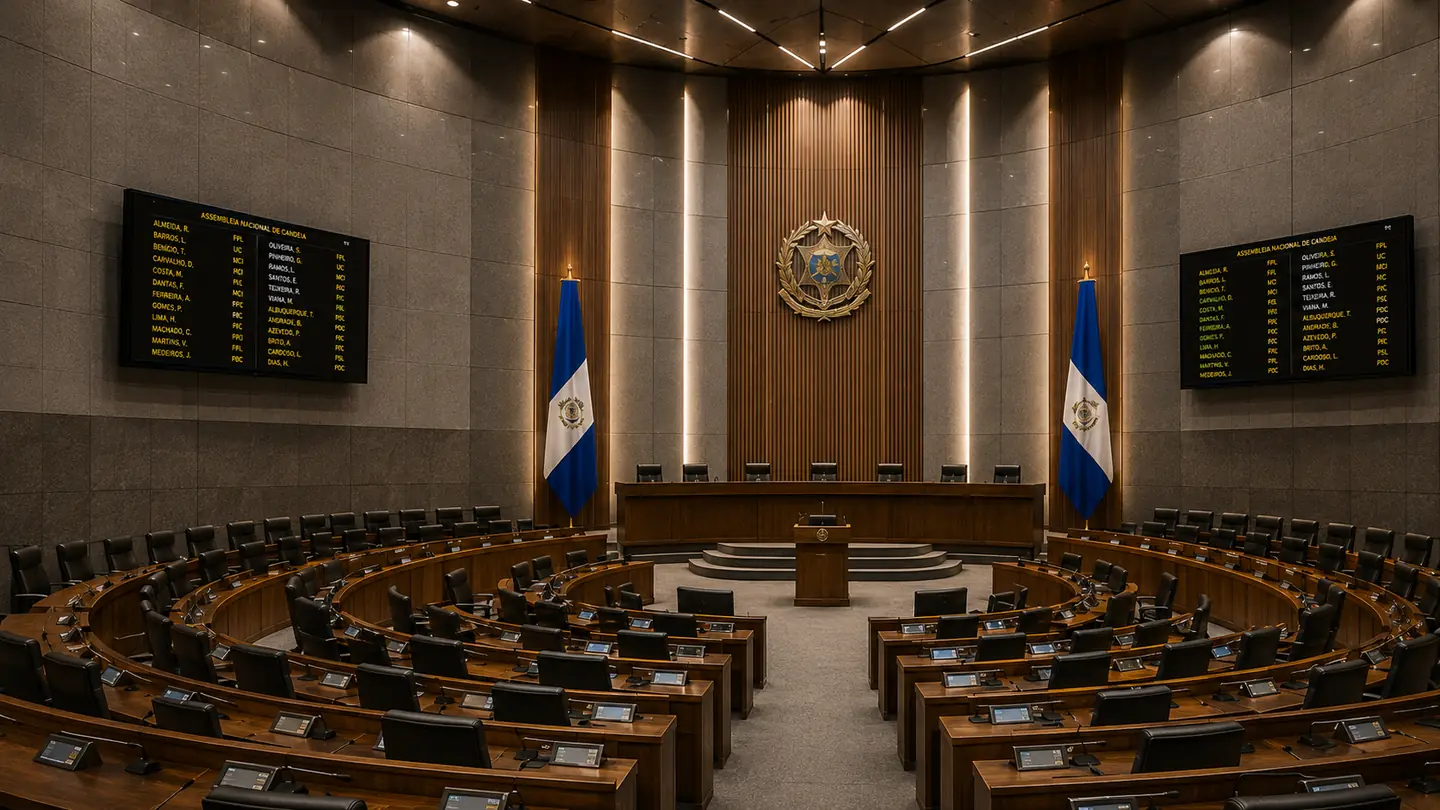
The Assembly has not yet been established.
This page explains how many seats the Assembly may have and who may stand for election.
The constitutional range
The Assembly shall have an odd number of representatives between 9 and 301. The specific number must result from a public formula established by organic law, taking into account the citizen population, pluralism, proportionality and institutional efficiency. Small political communities may receive specific ranges, but not in a way that hollows out the opposition, committees or separation of functions.
Who may stand for election
Every citizen who reaches the age of 18 by election day and is not subject to a constitutionally valid incompatibility or ineligibility is eligible. No distinction may be made between citizenship by foundation, descent, adoption or naturalisation, nor may eligibility require birth in a specific place, original citizenship or a minimum period of physical or digital residence.
What is not yet fixed
Without a constitutionally existing citizen population, a permanent organic law and an actual Candeian election, there is no basis for stating how many representatives the first permanent Assembly will have within the 9–301 range.
The rule does not change after the political landscape is known
A change to the formula takes effect only from the subsequent Candeian election and must respect electoral stability. This reduces the possibility of redesigning the chamber after the political balance is already known.
Primary basis: Art. 187.